
Experience the Unexplored
MYTH OF CENTRAL BHUTAN


Trip Overview
Here rich Himalayan flora and fauna, dazzling white peaks and lush valleys provide Bhutan’s stunning beauty and aesthetic grandeur. Thimpu Lying in a valley (elevation 2350) Thimpu is unlike any other capital in the world. The traditional architecture of its houses and buldings is particularly striking. Bhutan, best known to the world as the last Shangril-la has a rare combination of harmony and accord amidst a landscape of incredible beauty. Protected by mighty Himalayas from the rest of the world and enriched by the essence of Drukpa Kagyu School of Buddhism, Bhutan has managed to remain shrouded deeply in a jealously guarded isolation. A basic understanding of Bhutan’s Buddhism is essential to understanding the Bhutanese.
Detailed Itinerary
Day
01
Arrival in Kathmandu
Arrival in Kathmandu. Overnight. Or connective Flight. Mostly Flight is 10.30 in the morning to Paro.
Day
02
Kathmandu or Delhi or Bankok - Paro. (2250 M)
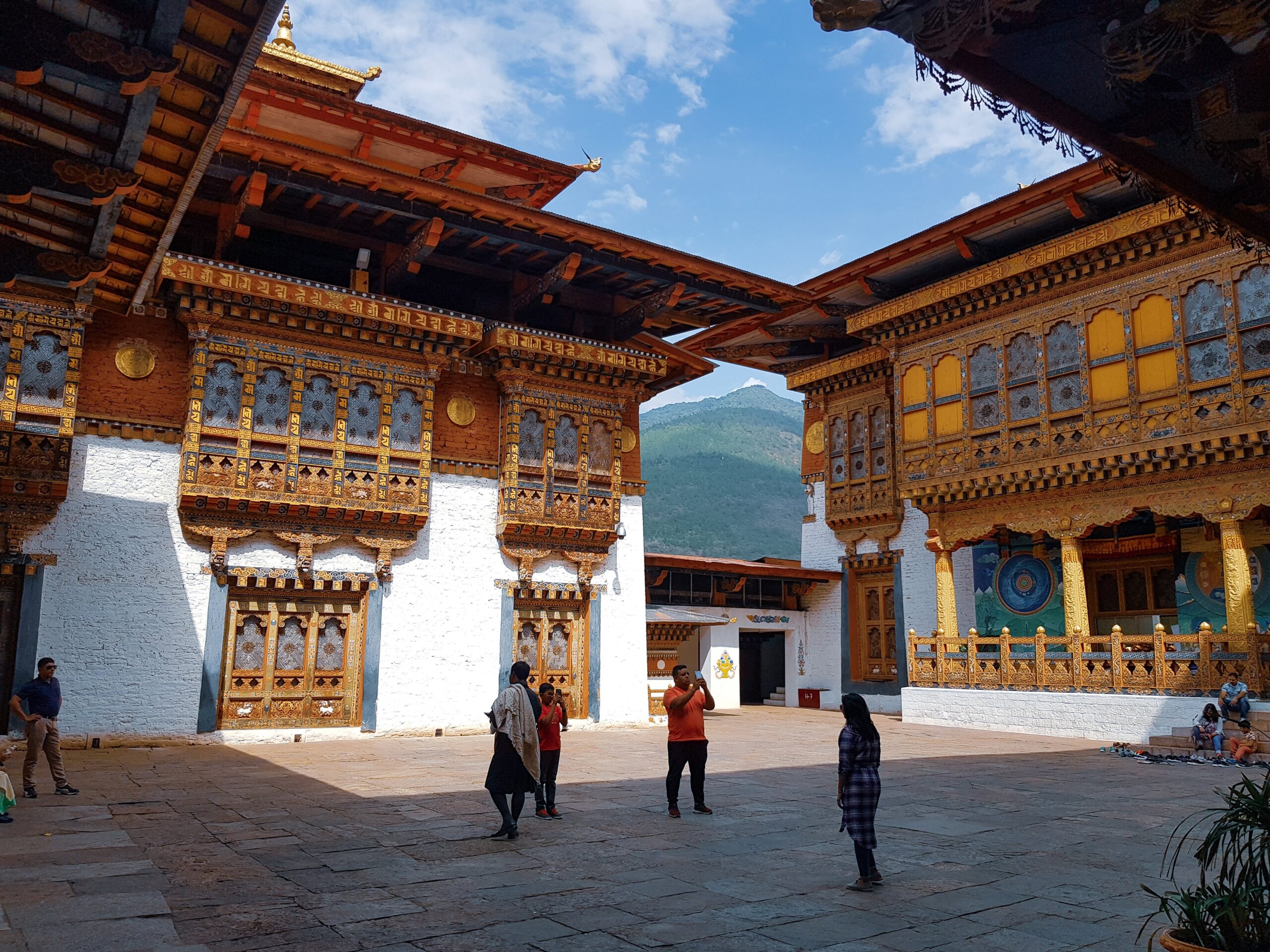
Arrive at Paro International Airport by Druk Air. On arrival at Paro International Airport, Expert Asian Tours and Travel representatives will receive you. Check in hotel/lunch. Start the day by visiting the National Museum (Ta- Dzong). Once the watchtower for Rinpung Dzong (Fortress), it was converted into the national Museum in 1968. The museum stands on a promontory overlooking the Paro valley in all its glory. Visit Paro Rinpung Dzong. A flagstone path rises gradually from a beautiful wooden bridge with single roofing and buttressed by two guardhouses of the Dzong. Today, this massive fortress built in 1646 AD is the seat of the district administration as well as the home for the monastic school. The central tower (Utse) of the Dzong, with its superb woodwork, is one of the most beautiful in Bhutan.
Room with fullboard
Day
03
Hike to Tiger’s NEST (800 m from Paro valley) – Thimphu
Drive up to Ramthangkha (10 Km from Paro Town) and walk to the Monastery. The name Taktsang means “Tiger’s Nest’’ The Monastery is perched on a rocky ledge with a sheer drop of nearly 4000ft overlooking the Paro valley. Taktsang is one of the most venerated pilgrimage sites in the Himalayas. However, most people can only visit the main site called Taktsang Pel-phu. According to legend Padmasambhava founded Taktsang Monastery in the eighth century. It is believed that the Guru came to this place on the back of a tigress from Khengpajong in the Kurtoe region and meditated here for three months in a cave before converting the Paro valley to Buddhism. After getting back you will be driving to Thimphu. Overnight in Thimphu.
Overnight in Thimphu.
Day
04
Thimphu sightseeing
After breakfast visit the National Memorial chorten (built in memory of the late king). We will encounter lots of interesting people circumambulating the chorten. We then drive to the Changangkha Temple via the R.I.C.B housing colony, which offers a good location to photograph the temple. Drive to Takin National Animal sanctuary to photograph the Takin (Bhutan’s National Animal). Drive to the National Library to see the collection of old manuscripts & then visit the Folk Heritage Museum. Lunch in town. Afternoon: we visit the Institute of Arts & Crafts, where young artists are trained in the traditional ways of painting & statue making. Drive to Zilukha Nunnery & on to a viewpoint to photograph the city at sunset. If the time permits, we will visit a traditional hand made paper factory & goldsmiths workshop. Visit Trashi Chhodzong. This old fortress now serves as the center of administration, housing His Majesty the King of Bhutan’s office, the central Monastic Body as well four branches of administration.
Day
05
Thimphu - Punakha. (77 km. 3 hours. 1350 m)
Early rise and drive to the Dochula (3150m pass) for breakfast. If the weather is clear, the Dochu- la pass offers the most spectacular views of the eastern Himalayas mountain ranges. Then we drive to Punakha for lunch at hotel. After lunch we visit Punakha Dzong, the most beautiful in Bhutan. It was built in 1637 by Shabdrung Ngawang Namgyel. The Dzong is located at the convergence of two rivers, the Pho-chu & Mo-chu. After Dzong we drive further to take a small hike to Nyzergang to visit the Khamsum Yuelly Namgyal Temple. Night Punakha
Day
06
Punakha – Trongsa. (128 km. 5 hours. 2200 m)
We will drive to Trongsa. It is 128 kilometers and 5 hours drive from Punakha. Wangdue is another District and is only a half hours drive from Punakha. In 1638 wangdue was Dzong was built by Shabdrung Ngawang Namgyal one year after the Punakha Dzong. The road will climb all the way to Pele-la pass at 3300m. It is main landmark between east & west and from here we will drive all the way down to Trongsa. On the way we will come across Yak herder’s camps and encounter Yaks especially during the winter, we will also see high Himalayan villages like Rukubji and Chendebji. All the houses cluster together separate from the fields.
Day
07
Trongsa - Bumthang. (68 km. 2 hours. 2600-+m)
Trongsa is the ancestral home of Bhutan’s Royal Family. Both the First and Second King ruled the Kingdom from this ancient seat. All the Kings of Bhutan have to become Trongsa’s Penlop (Honorary post of Governor) prior to being crowned as the Druk Gyalpo (King of Bhutan). Trongsa Dzong (Fort), is one of the largest & most impressive in the country. It was first built in 1648 and later enlarged many times. Because of being situated on a high commanding position on the only connecting route between the eastern and western sectors (where the trail actually runs through the Dzong), the Trongsa Penlop was able to control the whole of the eastern region very effectively for many centuries. Visit the ancient watchtower (Ta- Dzong), which is situated above the town. About three hours drive from Trongsa; we will reach to the famous valley of Bumthang. Bumthang is made up of four main valleys, Chummey, Tang, Ura and Choskhor (Jakar). A few miles after crossing Yotong La Pass (3400m), you will encounter buckwheat fields and the only straight road in the country entering the first valley of Bumthang, Chummey. The main development center of the province is situated in Choskhor commonly known as the Jakar valley where you can see a little bit of the modern touch with Swiss influence. On the way one can see girls weaving Yathra the traditional woolen materials used for different purposes on a traditional handloom. The finished products are all displayed in a shop outside in the open & on sale.
Over night in Bumthang
Day
08
Bumthang
Bumthang is different from all the other valleys in Bhutan. It is very spacious and open ranging in altitudes from 2600m to 4000m. Bumthang is a heaven for hikers and Trekkers, not to mention the numerous beautiful and important Buddhist monasteries and pilgrimage sites, making it the Cultural and Historic heartland in Bhutan. One could spend months exploring this fascinating valley. Almost every little valley or hill has a background of interesting myths and legends about Kings, Buddhist masters and Serpents. Bumthang is especially dominated by the religious influence of Padmasambhava (believed to be the second Buddha 7th –8th A.D) and his reincarnation the Treasure revealer. Terton Pemalingpa 1450-1521, who is known to have discovered many sacred Buddhist texts hidden by Padmasambhava (Guru Rimpoche) in various places. Take a walk up to Tamshing monastery, founded by Terton Pemalingpa, where about 200 monks reside. Visit the historical temple. Visit the Wangdichholing Palace, Jambay Lhakhang, Kurjey Lhakhang, and the oldest monastery in the Kingdom. All the Kings of Bhutan are taken for their cremation rites to Kurjee Monastery. Visit some more temples. Drive to the sacred Mebartsho (meaning Burning Lake). The importance of this site is indicated by the extensive array of prayer flags and is considered as one of the most holy places for Buddhist pilgrimage. After this visit drive back to Chamkhar and stroll in town.
Day
09
Bumthang - Mongar. (193 km. 7 hours)
After Breakfast the drive will take you through the pine forests keeping the Jakar Dzong view behind us. Taking a half hour drive you will cross the Tang Chu climbing towards and through Tangsebgi village. The drive reaches Ura valley the highest and most eastern part of Bumthang. It takes around 2 hours drive through blue pine trees, villages and onto the high pass of sheltheng la 3600m/11800 ft. Looking towards the north in clear weather one can see the high white Gangkar Punsum (7541m/2974ft) the highest peak in Bhutan. The landscape of Ura valley is different from that of the others, with round sweeping slopes, fertile pastures and wide fields. At the bottom you will see the large and unusual village with its cluster of big houses united by the paved flagstone alleys, a rare sight in Bhutan. The big community monastery dominates the village. It is dedicated to Guru Rinpoche (the great teacher). Ura festival usually takes place in the 2nd week of May & sometime in June, depending on the Bhutanese lunar calendar. Thimshingla National park starts here and if one wishes one can visit the field office at Ura. It is open Monday to Friday and closed on holidays. The drive from here will take you through the National Park. There is also the Rhododendron Flower Park this way (only worth seeing in spring time). Today you will cross the highest point of the road in Bhutan. The Thimshing La Pass at around 3800 m. and you will see a lot of changes in vegetation and villages
Night Mongar.
Day
10
Mongar - Trashingang. (92 km. 1.h)
After breakfast drive to Trash gang, crossing a low pass between these two Districts called Kori – La Pass 2400 m. You will go through villages like Yedi and cross the Chakzam, the iron Bridge. Trashigang is considered to be one of the Biggest Districts in Bhutan and it holds the headquarters of Trashigang. The 3rd Temporal Ruler of Bhutan Menjyur Tenpa built it in the 17th century overlooking the convergence of Drangme Chu & the Gambri Chu
Night Trashingang.
Day
11
Trashigang - Bumthang
After breakfast drive to Bumthang crossing the highest Pass on the way back.
Day
12
Bumtang - Wangdue
Gnagtey Gonpa was built on a small hillock surrounded by blue pine trees. A descendant of Pema Lingpa (the great Bhutanese saint of Bumthang) built the Gonpa in the 16th century and it is a Nyingmapa monastery.At the end of the 17th century it was enlarged once and at present it is headed by the 9th reincarnation called Gangtey Trulku. It is under renovation at present. It is run by the family houses of Gomchens (layman), who worship and work at the monastery. Further down you will reach the Phojikha valley. This place is reserved for the migration of the black neck crane. The people out here have become friendly with the endangered species and every consecutive year starting from the 2nd week of November to the 1st week of April the fields and marshes of this undisturbed valley offer a truly magnificent sight as you watch the cranes.
Day
13
Wangdue – Thimphu – Paro
Drive back to Thimphu for lunch and last stop for shopping. You could also see some more sights in Thimphu. In the evening drive back to Paro for tomorrow’s departure.
Day
14
Departe to Kathmandu
Representative from our company will bid you a farewell and safe journey. Fly to Kathmandu. 1.5 hour Flight to Kathmandu, Upon arrival our team will assist you to hotel in Kathmandu
Day
15
Kathmandu: Free Day
Its a free day but you can do shopping or sightseeing in Kathmandu
Day
16
Departure
Free till departure
What's Included
- all accomodation
- foods in bhutan
- visa and permit
- flight: Kathmandu to paro and paro to Kathmandu
- hotel in Kathmandu
- all necessary transportation
What's Excluded
- Personal Exps
- Tips for guide and other
- Bar Bill ,Laundary,other things
- Insurance during your travel to bhutan
- Extra Activitites during
Additional Information
It is one of the moderate types trekking, because you are going above the 4156 meters at high. That’s why before you decide to do this trek you have to do some training. You will be walking 5 to 8 hrs a day; you need to have very good shoes. As you are going every day 500 to 1000 meters of altitude, you have to drinks lots of Water. During your trek you might get altitude sickness. Please read the symptoms of altitude sickness. If you have symptoms of ATS please tell our guide, so that he can take care of you.
List of things you need to bring: Dawn Jacket-1, Wind Proof-1, Gore-Tex-1, T-Shirt-4/6, Socks-4/6, Hat-1, Woolen Hat-1, Gloves-1pair, Trekking Boot-1Pair, Hiking shoe or Plipflop-1Pair, Raincoat-1, Water Bottle(1/2ltrs), Sunglass-1, Sun lotion, Towel, Thormel Trouser-2 pairs, Pool over-1, Sleeping Bag-1.
Best Months to do this trek: Middle of September – November, Feb- April.
Rhododendron: Middle of March – April.
Google Reviews
I did the 14-day EBC trek with Ace and my experience was nothing short of incredible. This was my first high altitude trek and as a female solo traveller competing this trek in the...
Ace The Himalaya was an excellent choice for our Everest Base Camp trek. From the initial planning stages to the completion of the trek, the coordination was seamless and extremely well organized. Everything was...
We just completed the Everest Base Camp trek with Ace the Himalaya and had an absolutely incredible and unforgettable experience!!! Our lead guide, Nimesh, was outstanding. His English was excellent, which made everything so...
You May Also Like
Paro beckons you with promises of breathtaking natural sights, cultural richness and good accommodation; you can view Mount Chomolhari from Drugyel dzong, capture Paro’s incredible landscapes from Ta-Dzong and...
This trek is exclusively designed for those who wish to explore the most of Bhutan on foot within the short span of time. Exploration begins with a hike to...
Bhutan is a landlocked state in South Asia, located at the eastern end of the Himalayas and bordered to the south, east and west by the Republic of India...
Ready to begin your journey?
Speak with an Asian Travel Expert today. We'll help you design a bespoke itinerary tailored to your pace, passion, and purpose.