
Experience the Unexplored
Classic tour in Bhutan – Experience the Local


Trip Overview
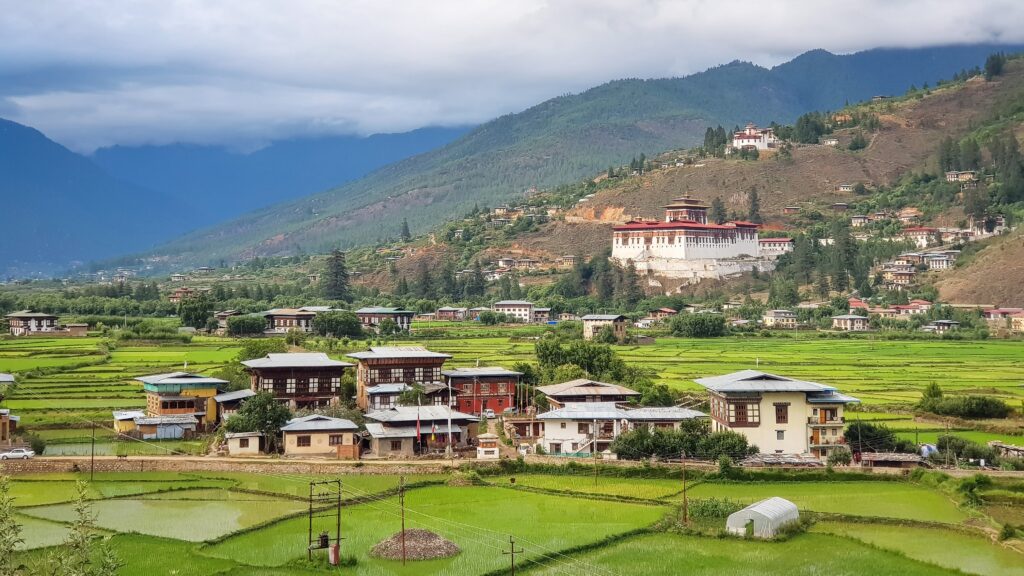
Bhutan is a landlocked state in South Asia, located at the eastern end of the Himalayas and bordered to the south, east and west by the Republic of India and to the north by the People’s Republic of China. Bhutan is separated from the nearby country of Nepal to the west by the Indian state of Sikkim, and from Bangladesh to the south by the Indian states of Assam and West Bengal.Bhutan existed as a patchwork of minor warring fiefdoms until the early 17th century, when the area was unified by Shabdrung Ngawang Namgyal, who fled religious persecution in Tibet and cultivated a separate Bhutanese identity. In the early 20th century, Bhutan came into contact with the British Empire, after which Bhutan continued strong bilateral relations with India upon its independence. Bhutan’s landscape ranges from subtropical plains in the south to the sub-alpine Himalayan heights in the north, with some peaks exceeding 7,000 metres (23,000 ft). The state religion is Vajrayana Buddhism, and the population of 691,141 is predominantly Buddhist, with Hinduism the second-largest religion. The capital and largest city is Thimphu. Although Bhutan is a small country,its diminutive size some what belies the diversity the country is blessed with. Its also what makes Bhutan a very special country.This tour is called the “Bhutan Dragon Trail Tour” as it goes from West Bhutan till East Bhutan and goes through all the important and lovely places in Bhutan.Located in a Geographic hotspot ,the kingdom’s southern parts lie in the tropical plains. Beginning at 100-175 mtrs.above sea level,the altitude keeps climbing as you go higher,at places reaching a whopping 5000 mtrs.(as in the alpine north). The highest habitable parts are places scarcely populated, as in Laya and Lunana regions. The natives are predominantly herdsmen rearing the yak..The inherent Bhutanese diversity extends to the culture too. The majority of the people are Buddhists. Hinduism is practiced mostly in the Southern belt. The East still has pockets where certain Shaman practices still exist. Black magic used to be an eastern specialty though the practice of the dark arts is waning. A village near Khaling, about 55 Kms from Trashigang was actually called the “Black Magic” village.The Central highlands of Bumthang are renowned for its Yatha Weavers. The Westerners(as in Paro,Haa,Thimphu, Punakha,and Wangdue)speak varying dialects of Dzongkha.
Detailed Itinerary
Day
01
Arrival in Kathmandu
Arrival and pick up from the international airport in Kathmandu, after some refreshment we will invite you for a traditional Nepali dinner o/n in a hotel.
Day
02
Sightseeing in Kathmandu
After Breakfast you will visit Pashupatinath, with two tiered golden roof and silver door is considered one of the holiest shrines for Hindu. It is Top Hindu temple of the world. Although only Hindus are allowed inside the temple, visitors can clearly see the temple and the activities performed in the temple premises from the eastern bank of the Bagmati river. Bouddhanath: This ancient colossal Stupa is one of the biggest in Nepal, and the center of Tibetan Buddhism in the world. Swayambhunath: The Buddhist temple of Swayambhunath situated on the top of a hill west of the city, is on the most popular and instantly recognizable symbols of Nepal.
Day
03
Sightseeing Patan and Bhaktapur
Today after breakfast visit Patan. The diversity of the medieval culture that allowed both Hinduism and Buddhism to flourish has left a rich legacy of impressive. Bhaktapur: The city of Devotees still retains a medieval charm and visitors to this ancient town are treated to myriad wonders of cultural and artistic achievements .The past glory of the Malla rulers continues to be reflected at the Durbar Square. Pottery and weaving are its traditional industries. Bhaktapur is famous for woodcarving, the Bhadgaolen topi (cap) and curd
Day
04
Flight Kathmandu-Paro – Thimphu
After arriving at the Airport, our guide will meet you and transfer you at Hotel in Thimpu. Thimphu is the capital of Bhutan and is most probably the smallest capital in the world, with a population of just one lakh.
Day
05
Sightseeing in Thimphu
Today you will visit the national textile museum,handicrafts emporium, institute of traditional medicines, the national library, the national animal Takin Zoo (takin has the head of a goat and body of a cow), and visits to many other sites depending on the time in hand.
Night in Thimphu.
Day
06
Thimphu to Punakha and Wangdue (Gangtey)
Drive to Punakha and Wangdue and enroute stop at Dochula Pass. This ancient trail is today one of the most scenic spots in Bhutan. The setting is grand with an intricate maze of 108 elegant stupas splitting the lone highway into two. A Monastery dedicated to and honoring His Majesty the Fourth King stands facing the awe inspiring snow capped mountains (the eastern Himalayas), known as the table mountain. The celebrated peak is the Gangkar Phuensum, besides numerous others. From Dochula Pass the road descends into semi-tropical setting. The air gets warmer and Punakha is warm. Punakha is the old capital city of Bhutan and is home to the Punakha dzong-one of the most spectacular with a scenic setup standing in before the confluence of the Pho Chhu and Mo Chhu (The male and female rivers). The Punakha Dzong is a historic. The Zhabdrung, founder of Bhutan and the architect behind most of the strategic Dzongs, rests embalmed in an inner sacred sanctum. It was here in 1907 that the people of Bhutan chose and enthroned Gongsar Ugyen Wangchuck as Bhutan’s first hereditary king (the Kings of Bhutan are all crowned here in a special “inner ceremony”). His Great Grand son, His Majesty Jigme Khesar Namgyal Wangchuck was crowned here in 2009, on the eve of the Wangchuck Dynasty’s 100th anniversary. The Dzong is the winter residence of the Je Khenpo (Chief Abbot of Bhutan). After visiting Punahka drive to wangdue (Gangtey)
Day
07
Wangdue (Gangtey): to Paro Valley
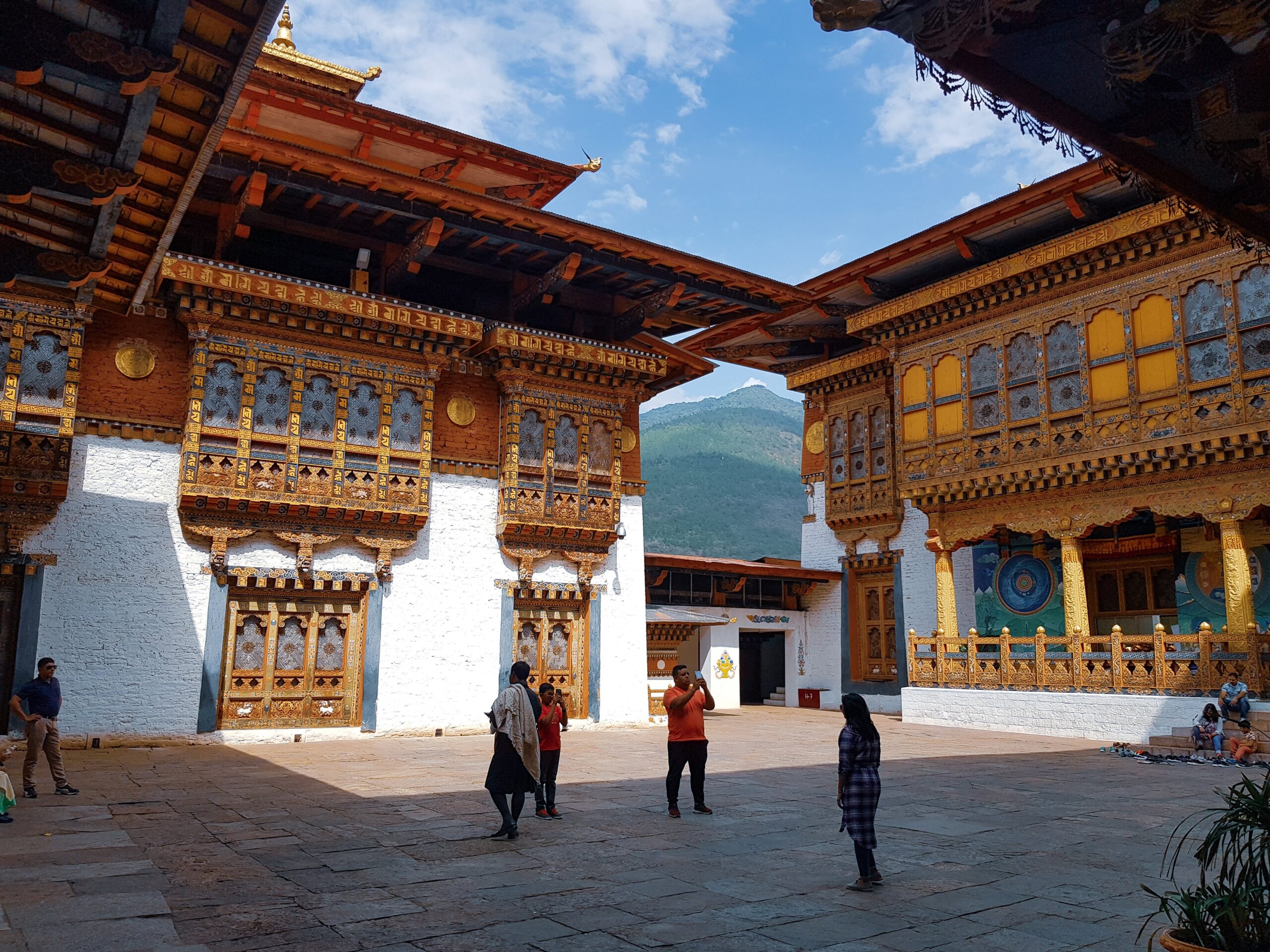
After breakfast today drive back to Paro via Thimpu. After arriving at Paro, check in Hotel and later you will be visiting the Highlight of Paro. Like Paro Dzong and view the fine collection of ancient Thangkha paintings, textiles, weapons and other artifacts or perhaps stroll up the Paro main street.
Overnight Paro Valley-traditional Bhutanese Hotel.
Day
08
Sightseeing in Paro
This morning walk to the Taktsang Monastery (Tiger’s Nest) viewpoint (2 hrs round trip) or right up and enter the Monastery (5 hrs). This walk is quite steep in sections however you are able to travel up on horseback if you wish. The monastery clings impossibly to a cliff of rock at 3000 ft above the valley floor. Afternoon at leisure your options include a to the old ruined fortress of the Drugyel Dzong, the historical site of the Fort of Drukpa Victory (14km from Paro) from which the Bhutanese used to repel the Tibetan invaders again and again. On a clear day views of the 24,000 ft snow domed peaks of sacred Mt. Jhomolhari can be seen.
Day
09
Fly to Nepal
Early morning departure from your hotel to Paro airport for your onward flight. Note: This tour can be combine with India and Nepal. After this you can visit india or Nepal.
Day
10
Free Day
The last day in Kathmandu you can enjoy shopping in Kathmandu in Thamel
Day
11
Departure
Free till Departure
What's Included
- FLight: Kathmandu to Paro and to Kathmandu
- All necessary permits and visa
- Cccomodation on 3 star
- Meals ( Breakfast , Lunch, Dinner)
- Necessary Tranportation
- English Guide
What's Excluded
- Tips
- All personal Expesnese
Additional Information
It is one of the moderate types trekking, because you are going above the 4156 meters at high. That’s why before you decide to do this trek you have to do some training. You will be walking 5 to 8 hrs a day; you need to have very good shoes. As you are going every day 500 to 1000 meters of altitude, you have to drinks lots of Water. During your trek you might get altitude sickness. Please read the symptoms of altitude sickness. If you have symptoms of ATS please tell our guide, so that he can take care of you.
List of things you need to bring: Dawn Jacket-1, Wind Proof-1, Gore-Tex-1, T-Shirt-4/6, Socks-4/6, Hat-1, Woolen Hat-1, Gloves-1pair, Trekking Boot-1Pair, Hiking shoe or Plipflop-1Pair, Raincoat-1, Water Bottle(1/2ltrs), Sunglass-1, Sun lotion, Towel, Thormel Trouser-2 pairs, Pool over-1, Sleeping Bag-1.
Best Months to do this trek: Middle of September – November, Feb- April.
Rhododendron: Middle of March – April.
Google Reviews
I did the 14-day EBC trek with Ace and my experience was nothing short of incredible. This was my first high altitude trek and as a female solo traveller competing this trek in the...
Ace The Himalaya was an excellent choice for our Everest Base Camp trek. From the initial planning stages to the completion of the trek, the coordination was seamless and extremely well organized. Everything was...
We just completed the Everest Base Camp trek with Ace the Himalaya and had an absolutely incredible and unforgettable experience!!! Our lead guide, Nimesh, was outstanding. His English was excellent, which made everything so...
You May Also Like
Paro beckons you with promises of breathtaking natural sights, cultural richness and good accommodation; you can view Mount Chomolhari from Drugyel dzong, capture Paro’s incredible landscapes from Ta-Dzong and...
This trek is exclusively designed for those who wish to explore the most of Bhutan on foot within the short span of time. Exploration begins with a hike to...
Bhutan is a landlocked state in South Asia, located at the eastern end of the Himalayas and bordered to the south, east and west by the Republic of India...
Ready to begin your journey?
Speak with an Asian Travel Expert today. We'll help you design a bespoke itinerary tailored to your pace, passion, and purpose.