
Experience the Unexplored
Annapurna Circuits Trek




Trip Overview
This trek is one of the great walks of the world, making a complete circuit of the huge Annapurna Massif in central Nepal; it provides dramatic mountain scenery and a fascinating mix of local people and culture. Starting from Besisahar we head north up the Marshyangdi Valley, through lush green foothills and terraced rice fields. Climbing higher we progress through alpine forests to a dry desert region and the Tibetan Buddhist village of Manang. The mountain views are superb; Lamjung, Himalchuli, Manaslu and the Annapurnas tower spectacularly over the valley. The highlight of this trek is crossing the famous Thorung La pass (5416m) to enter the Kali Gandaki Valley and the long descent to the Hindu temple at Muktinath. We continue down through the deepest gorge in the world before climbing to Ghorapani. Awaking early we ascend Poon Hill (3193m) for a sensational sunrise with views of Dhaulagiri and Annapurna. Our return to Pokhara takes us through delightful villages and ends at the luxurious Fishtail Lodge on Phewa Tal Lake.
Trip Highlights
The best time to trek the Annapurna Circuit depends on weather, trail conditions, and crowd levels.
- Autumn (September – November) – BEST TIME
- Spring (March – May) – SECOND BEST
- Winter (December – February) – CHALLENGING
Quick Facts
- Duration: 12–21 days (depending on route and pace)
- Distance: 160–230 km (varies with transportation options)
- Max Elevation:>Thorong La Pass (5,416m)
- Difficulty: Moderate to challenging (due to altitude)
- Best Seasons:Spring (March–May) &Autumn (September–November)
- Permits Required: ACAP Permit & TIMS Card
Highlights of the Annapurna Circuit Trek
- Thorong La Pass (5,416m) – The highest and most thrilling point of the trek.
- Diverse Landscapes – From lush subtropical forests to arid high-altitude deserts.
- Cultural Richness – Visit traditional Gurung, Thakali, and Tibetan villages.
- Natural Hot Springs – Relax at Tatopani after long trekking days.
- Mountain Views – Annapurna Massif, Dhaulagiri, Machhapuchhre (Fishtail), and Manaslu.
- Muktinath Temple – A sacred pilgrimage site for Hindus and Buddhists.
Detailed Itinerary
Day
01
Arrive Kathmandu.
It is a panoramic thrill flying into Kathmandu on a clear day. The views of snow-capped mountain peaks sprawling down below you are almost ecstatic, beginning a whole chain of memorable experiences that stay with you for a long, long time. A representative and driver from Explorer Nepal will meet you at the airport and escort you to Hotel. At the hotel you will be briefed about your daily activities.
Check In at the Hotel.
Day
02
Sightseeing tour.
After breakfast at the hotel, commence the sightseeing tour of Kathmandu city, Swayambhunath and Patan city. Kathmandu city: Kasthamandap, the source of the name Kathmandu means ‘made from the timber of a single tree’. Also known as Kantipur, the capital Kathmandu is the hub of Nepal’s art and culture. Swayambhunath Stupa: Said to be around 2000 years old, this Buddhist Stupa sits atop a hill. The main stupa is composed of a solid hemisphere of brick and earth supporting a lofty conical spire crowned by a pinnacle of Copper gilt. Patan city: Located about 5 km south of Kathmandu, Patan is one of 3 royal cities in the valley. A destination for connoisseurs of fine arts, Patan is filled with wood and stone carvings, metal statues, ornate architecture, including dozens of Buddhist and Hindu temples, and over 1200 monuments.
Overnight at Hotel.
Day
03
Fly to Pokhara from Kathmandu.
We take a thirty-minute flight to Pokhara from Kathmandu airport. During the flight, we get to savor the most mesmerizing views of glorious Manaslu and the snow-capped Annapurna mountain range. At an elevation lower than that of Kathmandu, it has much more tropical feel to it; a fact well appreciated by the beautiful diverse flowers that prosper in this environment. The enchanting city with a population of around 95,000 has several beautiful lakes and offers stunning panaromic views of Himalayan peaks. The valleys surrounding Pokhara is home to thick forest, gushing rivers, emerald lakes and of course, the views of world famous Himalayas. The serenity of the lakes and the magnificence of the Himalayas rising behind them create an ambience of peace and magic. PM: Free in Pokhara.
Overnight at Hotel.
Day
04
Trek to Birethanti (3520ft/1100m).
After breakfast at the hotel drive to Naya Pool along the graceful Modi Khola Valley. On reaching our destination, we begin our highly panoramic Annapurna trek. The route skirts through lush forest leading finally to Birethanti after walking for one hour. Birethani houses well-resourced shops, hotels, cafes, a police check post, a bakery and a bank, a nice little village town to have fun and settle in for our first over night on the mountains.
Lunch, Dinner and Overnight at Lodge.
Day
05
Trek to Ghandruk [1940m].
Leaving Birethani, we trail along terraced fields beneath the splendid panorama of awe-inspiring glaciated Himalayan mountain ranges. On passing a succession of flatlands, forest, cultivated lands and a suspension bridge over Khumnu Khola, we arrive at the beautiful village of Ghandruk after walking for 3 to 4 hours. An ideal vantage point in this pristine village offers breathtaking views of Annapurna South, Gangapurna, Annapurna III, Machhapuchhare and Hiunchuli. Several hotels and teahouses at the village welcome us with warmth and sincere hospitality while catering to the requirements of all trekkers’ who hit the trail through this village. Camping in its terraced fields can indeed be very exciting and adventurous!
Lunch, Dinner and Overnight at Lodge.
Day
06
Trek to Gurung Lodge, Majgaun (4480ft/1400m).
We cross the bridge nearby the lodge and start trekking heading up the Modi River. This is a little used trail that starts off on a rocky path along the riverbank and then meanders though a forested area. We then reach a long, winding stone staircase, which we start to trek up. We reach the level ground at a small farming hamlet. We then trek along this ridge to the village of Waday. From Waday there are far reaching views of the whole valley. Our trek then descends for a while to another bridge. After crossing this bridge, we have another uphill push, passing though small villages of Patlekhet and Majgaun before arriving at the Gurung Lodge. After lunch, you may chose to do a hike up to the nearby village of Tanchok, where there is a traditional house now made into a museum. The contents of the house illustrate how the local people live, together with the tools and implements of day to day traditional village life. You may also choose to visit the local school. Trek time 1-2 hours.
Lunch, Dinner and Overnight at Lodge.
Day
07
Trek to Basanta Lodge, Dhampus (4800ft/1500m).
This morning we start out trekking through the unspoiled village of Patlekhet. Our walk takes us through sub-tropical forests that include tree orchids, rhododendrons and magnolias. Along the way, we will stop at the village of Pothana where many Tibetan traders live and sell their souvenirs. After about 3 ½ hours, we arrive at the Basanta Lodge. From the lodge, there are sweeping views of the entire Annapurna Range. After lunch at the lodge there will be an optional walk through the old village of Dhampus.
Lunch, Dinner and Overnight at Lodge.
Day
08
Trek to Nayapul and drive to Pokhara.
After savoring the mesmerizing sight of Dhaulagiri, Tukuche Peak and other Himalayan giants from the popular vantage point of Poon Hill [3195m], you leave Dhampus and march ahead for Nayapul. Now you will pick up by our waiting vehicle and drive to Pokhara. In the evening, you are free to wander by the lakes of Pokhara.
Overnight at Hotel.
Day
09
Drive to Chitwan.
After breakfast drive to Chitwan [182km/5-6 hours under normal road condition] Chitwan National Park is a large and beautiful nature reserve occupying 932 sq. km. of land inhabitant of endangered royal Bengal tiger and the one-horned Indian rhino. Chitwan National Park was protected since the 19th century as a hunting reserve for Nepali royals and foreign aristocrats. In a famous hunting expedition, King George V and his son Edward VIII managed to slaughter 39 tigers and 18 rhinos in a single blood-soaked afternoon. Unfortunately, habitat loss and poachers continue to decimate the number of tigers and rhinos. Today, there are less than 80 tigers and 500 rhinos left in the Park. There are more than 50 species of mammals in Chitwan including monkeys, tigers, leopards, sloth bears, wild boar, hyenas, deer, elephants and rhinos. There are also 450 different species of birds and 67 species of butterflies. The main attraction of Chitwan is the Elephant Safari. It is a unique experience to explore the jungle on the back of a trained elephant. While you are not likely to see the Bengal tiger, you should be able to see the Indian rhino and enjoy one of the nicest nature reserves of the Indian sub-continent. Watch out for branches – particularly if you are sitting behind other passengers. Elephant Safari and Visit to Observation Tower Seated high on the back of an elephant, gain a unique viewpoint of the Chitwan jungle. As an experienced mahout tracks animals through the dense jungle growth as you sit back on a howdah, you can imagine yourself being a Rajah or Rani going on a shooting trip (with cameras of course!) in the days of yore. An elephant safari allows you to go places that would be impossible to get to by foot or Jeep and get up close to the wild animals of the jungle that are normally wary, but at home with a fellow creature of the jungle Spending some time on a nice observation tower in the jungle is another amazing experience. After an interesting jeep drive through different traditional villages to reach the tower. Tharu dance A melodious tribal dance performed by men and women with rhyme or drums and the clashing of sticks embodies and projects how to keep away the rhino and other wild animals from the human habitat and their farming land. You can enjoy your evening after dinner and watch the Tharu Stick Dance. We will arrange dance for your enjoyment adjacent to our Restaurant.
Lunch, Dinner and overnight at Resort.
Day
10
Jungle activities.
Wake up call. Morning tea/coffee Bird watching Chitwan is an ornithologist’s delight and a must for any serious twitchier, as more than 450 species of exotic birds such as the Oriental Pied Hornbill, Paradise Flycatcher, and Lesser Adjutant Stork congregate at this biological hotspot of Asia. Our experienced guides will take you to select spots ideal for birding, where you can observe a breathtaking diversity of these beautiful feathered creatures. After having hearty breakfast at the resort commences the Dugout Canoe ride. Dugout Canoe ride Floating down to Rapti River by dugout canoe is the best way to discover the habitat of crocodiles on the bank of the river. It is also a relaxing and better way to watch the different kind of birds and wildlife species when they come to the bank of the river to drink water. Elephant Breeding Center was established in 1985 at Royal Chitwan National Park (RCNP) and is the only EBC in Nepal. At the Elephant Breeding Program, 4km west of Sauraha, elephants are breed and trained. The best time to visit is in the afternoon when the elephants are fed. The Elephant Breeding Centre of Sauraha with great tourist attraction is said to be one of the only 3 such centers in the world. Elephant skin is extremely sensitive to sunburn and insect bites; they roll in dust and mud and throw dust on their backs to help protect their skin. This was one of such moments when this restless young Elephant tried to get rid of insect. Local school visit Situated in the serene location of Chitwan district, SOS Hermann Gmeiner School Bharatpur was established in 2004, with more than five hundred students and 45 staff at present. Nursery to Grade Five were the classes introduced in the first year, however, in the span of three years, the year 2007 came up with full-fledged classes up to Grade Ten. The school first appeared in the SLC examination in 2008 and started higher secondary level in Science stream in the very year with 38 students. In a very short span of time, with the efforts of dedicated, devoted and determined teachers, the school achieved fabulous result in the SLC examination glorifying its name as the best and one of the most reputed schools in the district. It was also awarded ‘The Best School’ by the District Education Office, Chitwan due to its excellent SLC result in 2008. Tharu village visit Tharu are indigenous people of the Terai. They have a distinct architectural style, building solely of the natural materials found in the area; straw, wood and mud. Even though by now almost all Tharus are Hindus some elements of their tribal religion can still be found. The villages are often peaceful, non-industrial havens, with the inhabitants engaged in a yearly agricultural circle. Drive back to lodge.
Lunch, Dinner and overnight at Resort.
Day
11
Drive to Kathmandu.
After breakfast at the hotel we drive back to Kathmandu – 157 kms (approx 05/06 hrs) On arrival in Kathmandu transfer to Hotel. PM: Free.
Overnight at Hotel.
Day
12
Departure Kathmandu
Our Nepalese support team will take you to the airport for your flight home.
What's Included
-
- Meet, assisted upon arrival at Kathmandu by our office representative.
- All arrival / Departure transfers as per the itinerary by air-conditioned vehicle.
- 03 Nights twin/double room accommodation with breakfast at 3 star hotel in Kathmandu.
- 01 Night twin/double room accommodation with breakfast at 3 star hotel in Pokhara.
- Kathmandu city tour as per the above itinerary with our local English speaking guide including monumental entrance fees.
- Meals (breakfast, lunch and dinner) with Tea and coffee and hot water during the trek including guide and necessary support staffs with their insurance and salaries.
- Lodge to lodge accommodation during the trek.
- Necessary trek transfers as per the itinerary.
What's Excluded
- Any meals in Kathmandu and Pokhara other than breakfast.
- Travel insurance.
- International air fare to and from Nepal.
- Nepal Tourist Visa fees.
- Items and expenses of personal nature.
Additional Information
It is one of the moderate types trekking, because you are going above the 4156 meters at high. That’s why before you decide to do this trek you have to do some training. You will be walking 5 to 8 hrs a day; you need to have very good shoes. As you are going every day 500 to 1000 meters of altitude, you have to drinks lots of Water. During your trek you might get altitude sickness. Please read the symptoms of altitude sickness. If you have symptoms of ATS please tell our guide, so that he can take care of you.
List of things you need to bring: Dawn Jacket-1, Wind Proof-1, Gore-Tex-1, T-Shirt-4/6, Socks-4/6, Hat-1, Woolen Hat-1, Gloves-1pair, Trekking Boot-1Pair, Hiking shoe or Plipflop-1Pair, Raincoat-1, Water Bottle(1/2ltrs), Sunglass-1, Sun lotion, Towel, Thormel Trouser-2 pairs, Pool over-1, Sleeping Bag-1.
Best Months to do this trek: Middle of September – November, Feb- April.
Rhododendron: Middle of March – April.
Google Reviews
I did the 14-day EBC trek with Ace and my experience was nothing short of incredible. This was my first high altitude trek and as a female solo traveller competing this trek in the...
Ace The Himalaya was an excellent choice for our Everest Base Camp trek. From the initial planning stages to the completion of the trek, the coordination was seamless and extremely well organized. Everything was...
We just completed the Everest Base Camp trek with Ace the Himalaya and had an absolutely incredible and unforgettable experience!!! Our lead guide, Nimesh, was outstanding. His English was excellent, which made everything so...
You May Also Like
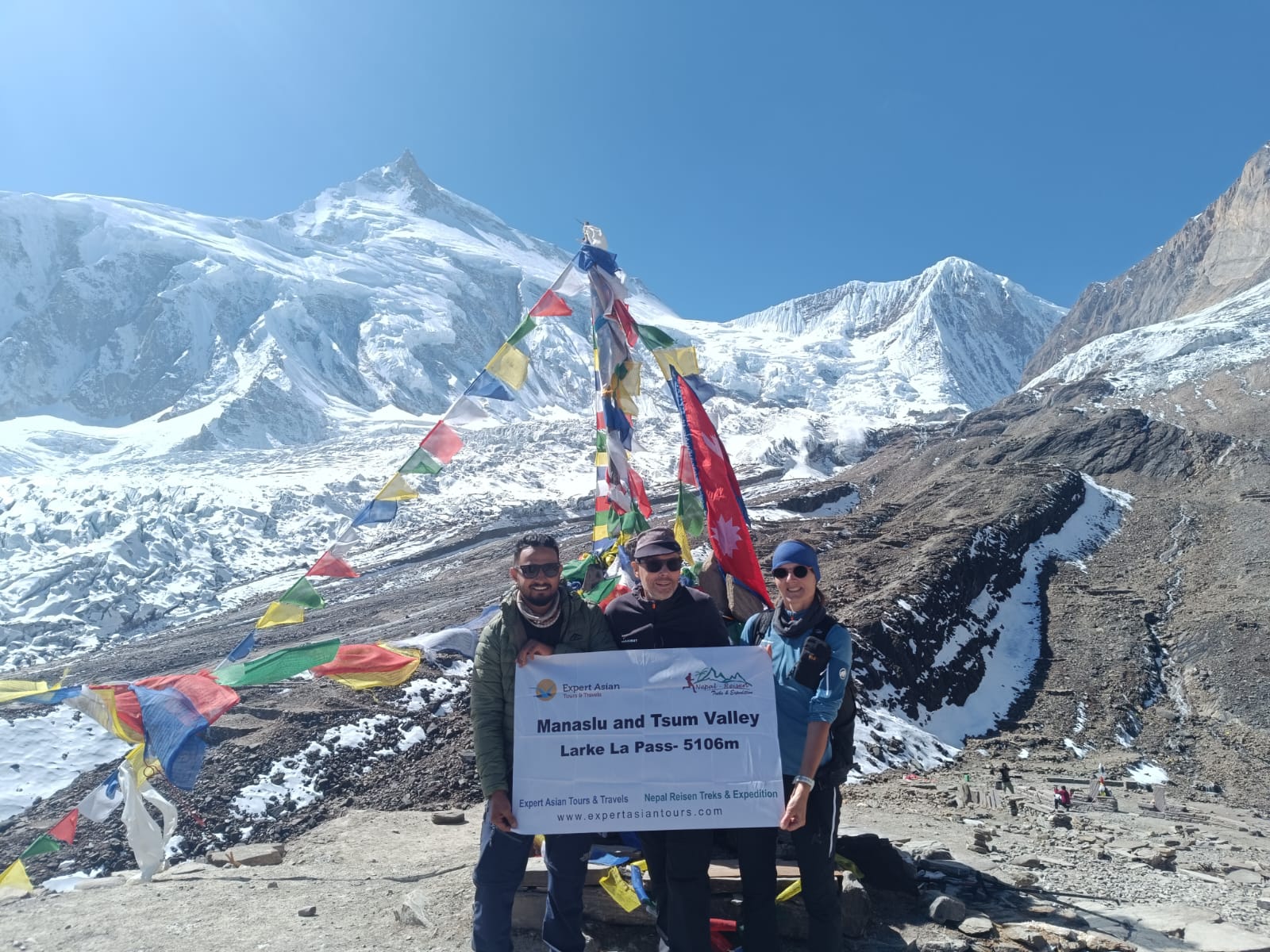
“Shangri-La Manaslu” refers to the idea of Manaslu being a hidden paradise, much like the mythical Shangri-La, a fictional utopia described in James Hilton’s novel Lost Horizon. Manaslu, the...
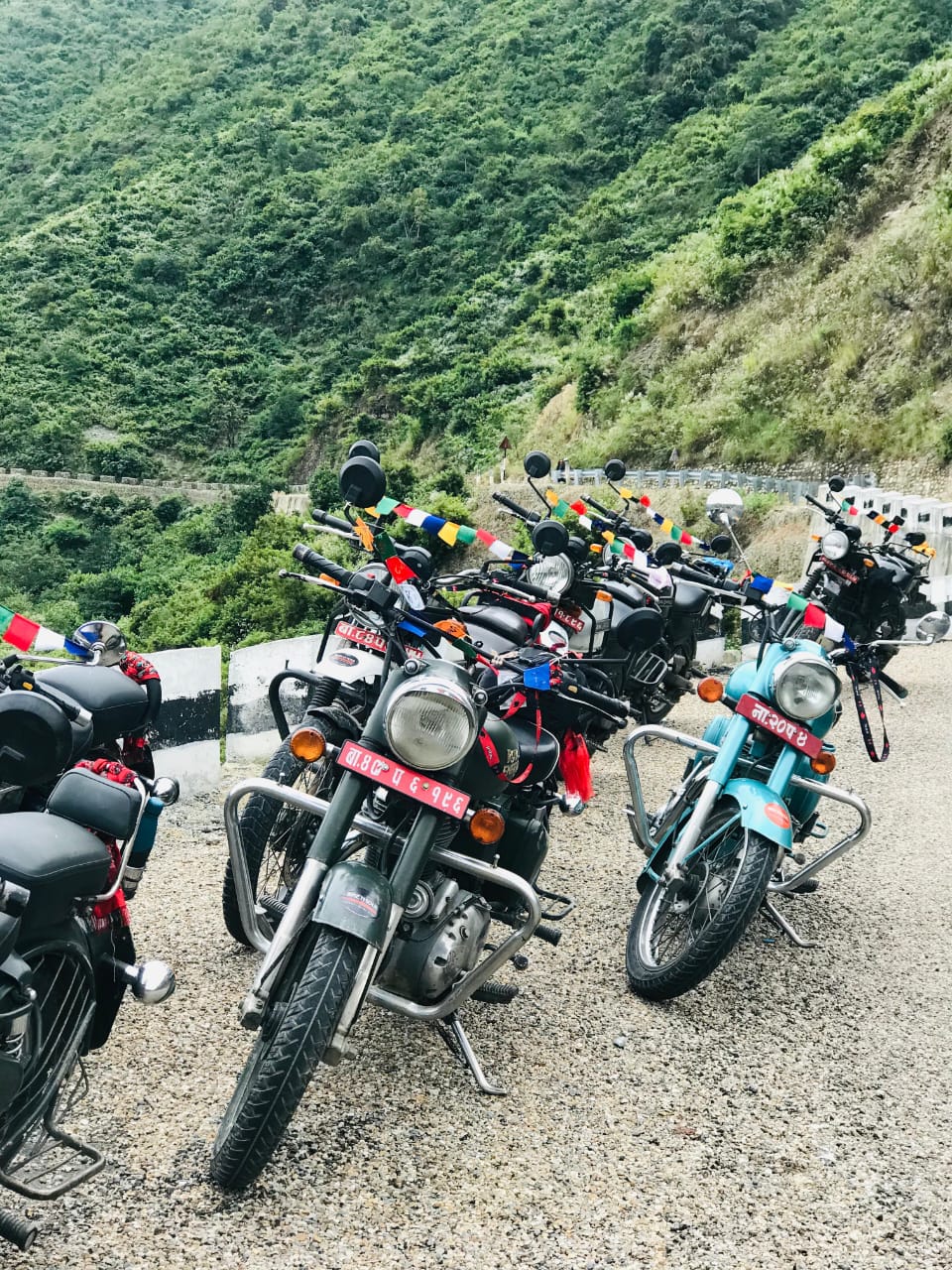
✔ Road Types: Mix of smooth highways, broken trails, and off-road sections ✔ Altitude Sickness: Risk above 3,000m (Mustang/Everest routes) ✔ Weather: Unpredictable – cold mornings, rain in monsoon...
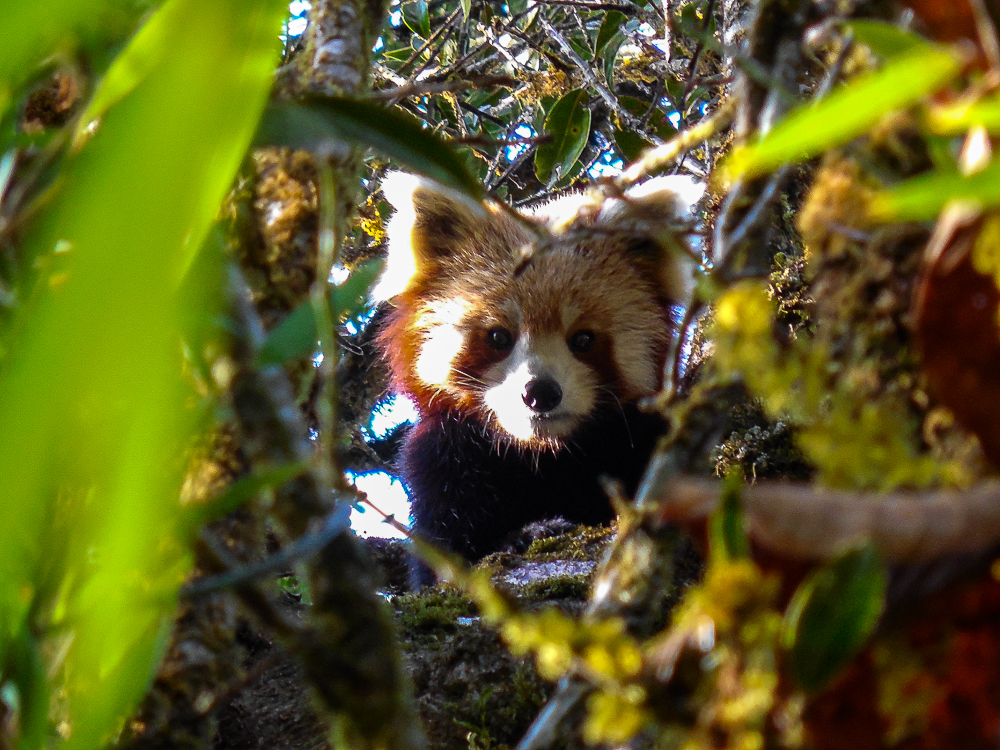
Sandakpur, located in the eastern region of Nepal within the Ilam district, is a paradise for nature lovers and wildlife enthusiasts. Nestled in the Singalila Ridge at an altitude...
Ready to begin your journey?
Speak with an Asian Travel Expert today. We'll help you design a bespoke itinerary tailored to your pace, passion, and purpose.